Guide to Buying Mexico Property Right

Gaspar Michel
Last update: 2026-06-04
Gaspar Michel
Last update: 2026-06-04
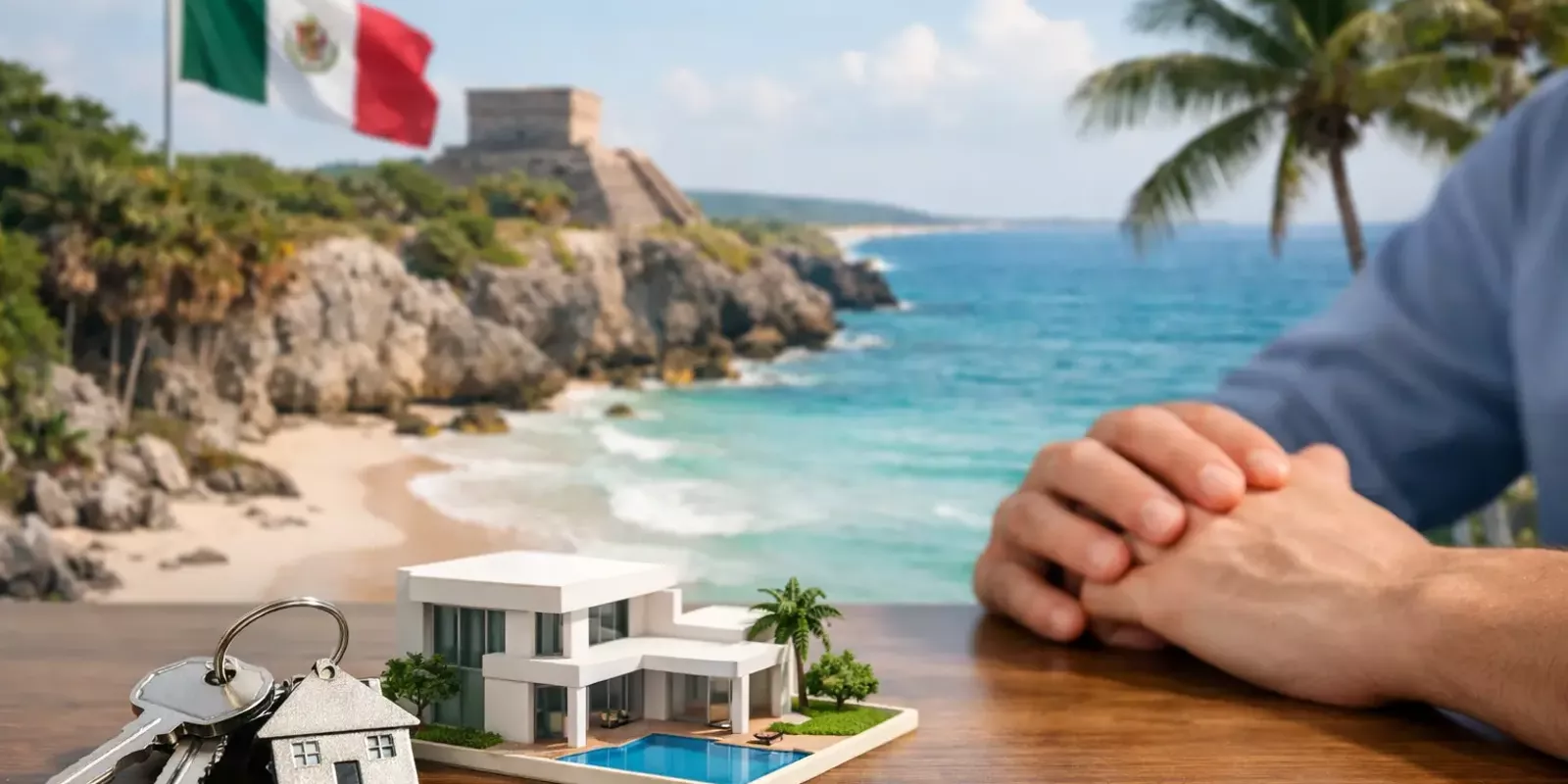
You do not need to guess your way through a cross-border purchase. A good guide to buying Mexico property should answer the questions that actually keep buyers up at night: Can I own legally? What will it really cost? Which area fits my goals? And how do I avoid buying the wrong property for the right dream?
For buyers looking at Tulum, Playa del Carmen, Puerto Aventuras, Akumal, or the wider Riviera Maya, those questions matter even more. This is a fast-moving market with strong lifestyle appeal, real rental demand, and very different asset types sitting just a few miles apart. Buying well is less about finding a beautiful listing and more about matching the property, legal structure, and location to what you want the asset to do for you.
Before you look at floor plans or ocean views, define the job of the property. That sounds simple, but it changes almost every decision that follows.
If you want a second home, you may prioritize walkability, beach access, and low-maintenance ownership over maximum yield. If you are buying a vacation rental, occupancy trends, building rules, management costs, and guest-friendly location become more important than your personal design taste. If this is a relocation or retirement move, infrastructure, healthcare access, year-round livability, and title clarity tend to matter more than short-term appreciation stories.
In the Riviera Maya, buyers often fall in love first and analyze later. That is understandable, but it can be expensive. A jungle-view condo in Tulum, a beachfront unit near Akumal, and a gated home in Puerto Aventuras can all be excellent purchases, but not for the same buyer profile.
Yes. Foreign buyers can legally acquire property in Mexico, including in popular coastal markets. The main issue is not whether you can buy, but how ownership is structured.
In restricted zones, which include areas near the coast and borders, foreign buyers commonly purchase through a bank trust called a fideicomiso. The bank holds the trust for the benefit of the foreign buyer, who retains the rights to use, improve, rent, sell, or pass the property to heirs. In some cases, especially for non-residential strategies or broader investment planning, a Mexican corporation may be considered, but that depends on the property use and your tax and legal objectives.
This is where many buyers get confused. The fideicomiso is not a workaround or a gray area. It is a recognized legal mechanism used for foreign ownership in restricted zones. What matters is having the correct legal guidance and making sure the property itself is clean, transferable, and properly documented.
The purchase flow is straightforward when the right professionals are involved. It usually begins with property selection and negotiation, followed by an accepted offer and a purchase agreement. After that comes due diligence, permit and trust setup if needed, closing cost review, and finally closing before a notary.
The notary in Mexico plays a more central role than many US buyers expect. This is not the same as a simple signature witness in the US. A Mexican notary is a specialized legal authority responsible for formalizing the transaction, reviewing key documents, calculating certain taxes and fees, and registering the deed.
That said, buyers should not rely on the notary alone to protect their interests. Independent legal review is still wise, especially for pre-construction, land, ejido-related history, or anything with unusual title circumstances.
This is the part that protects both your lifestyle and your capital.
First, confirm ownership and title status. You want to know that the seller has the legal right to transfer the property and that the deed history is consistent. If the property has any liens, unpaid taxes, utility debts, condominium fee issues, or unresolved inheritance claims, those need to be identified early.
Second, verify land use and development permissions. This is especially important in Tulum and surrounding growth corridors, where buyers are often attracted to pre-sale projects or land opportunities. A strong concept rendering is not the same thing as full legal readiness. You need clarity on permits, zoning, density allowances, environmental restrictions, and the developer's actual right to build what is being marketed.
Third, understand the condominium regime and building rules. Some buildings are designed for flexible short-term rentals. Others are not. If your financial model depends on vacation rental income, building bylaws, management quality, maintenance standards, and guest policies are part of the investment, not a side issue.
Purchase price is only one part of the decision. Closing costs, trust fees, legal fees, appraisal-related charges, registration costs, acquisition tax, and ongoing carrying expenses all affect the quality of the investment.
Then there are the local operating realities. HOA or condo fees can vary widely based on amenities and service levels. Property management for short-term rentals can materially change your net return. Furnishing, utility setup, insurance, reserve funds for maintenance, and marketing costs should also be part of your budget if the property is intended to generate income.
A property can still be a great purchase with higher carrying costs, but only if the numbers make sense for your use case. The most common mistake is buying based on gross rental projections and ignoring the operating side.
The Riviera Maya is not one market. It is a collection of micro-markets with different buyer profiles, risk levels, and upside potential.
Tulum attracts buyers looking for lifestyle appeal, wellness-oriented branding, and growth potential, especially in pre-construction and design-forward product. It can offer strong upside, but it also demands careful review of location, infrastructure access, developer credibility, and rental competition.
Playa del Carmen is often a better fit for buyers who want stronger year-round livability, an established urban center, and a broad rental base. Puerto Aventuras appeals to those who want a gated marina community with a calmer residential feel. Akumal and surrounding areas attract buyers focused on a quieter coastal experience with a different pace and lower-density character.
The right location depends on whether you want appreciation, cash flow, personal use, or stability. Usually, you can optimize for two of those more easily than all four.
Pre-construction can be attractive because entry pricing is often lower and payment plans can be more flexible. In the right project, it can create meaningful upside by the time delivery arrives.
But this is where discipline matters most. The trade-off is execution risk. Timelines can shift. Finishes can vary. Infrastructure around the project may take longer to mature than expected. The developer's track record matters just as much as the brochure.
Ask practical questions. Has the developer delivered similar projects? What is included in the purchase price? What happens if delivery is delayed? Are there penalties, protections, or escrow structures? A polished sales presentation should never replace document review.
Foreign buyers usually make better decisions when they work with a local agent who understands the submarket, an independent attorney who can review the transaction, and a qualified accountant or tax adviser if the purchase is part of a broader investment plan.
A strong agent does more than open doors. The right adviser helps you compare neighborhoods, pressure-test price, evaluate rental assumptions, identify weak project fundamentals, and coordinate the process so you are not managing a major purchase through fragmented information. That is especially valuable when you are buying from abroad and cannot be on the ground for every step. For many buyers in Quintana Roo, working with a local specialist like Gaspar Michel Real Estate adds that layer of practical, market-specific guidance.
The Riviera Maya offers real opportunity. It also rewards buyers who stay clear-eyed. The best property for you is not always the one with the best photos or the loudest appreciation claim. It is the one that fits your ownership structure, your timeline, your risk tolerance, and your actual reason for buying in Mexico.
If you approach the process with the right local guidance, proper legal review, and a realistic understanding of costs and market differences, buying in Mexico can be both exciting and well protected. Paradise is better when the numbers, paperwork, and location all work in your favor.
Gaspar Michel is a real estate agent in Tulum. I have lived in the Riviera Maya for 3 years and I can help you navigate the pros and cons of each city. I can help you if you are looking to buy a new home for yourself/family, a vacation rental, and/or both. I can help you find your dream home even if you are not a Mexican citizen.
Tulum Real Estate Virtual Tours
Buying real estate in Tulum has never been easier, even if you’re thousands of miles away. Thanks to virtual tours, video walkthroughs, and personalized video calls, you can now explore condos, penthouses, villas, and investment properties in Tulum from the comfort of your home.
Cautiva Tulum
Tulum is known for its seamless blend of modern architecture and natural beauty, and Cautiva Tulum is a perfect representation of this harmony. With 72 exclusive residential and commercial units, this development is designed to captivate the eye and create a serene living experience in the heart of
Navigating the Real Estate Maze: A Foreigners Guide To Buy Real Estate In Mexico
Embarking on the journey of purchasing real estate in Mexico as a foreigner can be a thrilling yet intricate process. To ensure a smooth transaction, it's crucial to understand the step-by-step procedures involved. In this blog, we'll walk you through the essential stages of acquiring your dream

